



The Skwad Blog

How Skwad Debt Watch scores your debt
Debt Watch turns four ratios into a single debt score: debt-to-income, housing, credit utilization, and high-interest load. Here are the benchmarks behind each one.
Sep 17, 2026
What Is FIRE? Financial Independence, Retire Early
FIRE means saving and investing enough that work becomes optional. Here's how the FIRE number works, what coast FIRE is, and how Skwad scores your progress.
Sep 17, 2026
Debt-to-Income Ratio Explained: How to Calculate DTI
Your debt-to-income ratio is your monthly debt payments divided by your gross monthly income. Here's how to calculate DTI, what lenders look for, and how to lower it.
Sep 10, 2026
How Much Should I Save Each Month? A Simple Answer
A common target is to save about 20% of your take-home pay each month, but the right number depends on your goals. Here's how to find your figure and make it stick.
Sep 10, 2026
Needs vs Wants: How to Split Your Budget (With Examples)
Needs are expenses you can't reasonably go without; wants are everything you choose on top. Here's how to split them, with the misclassifications that trip people up.
Sep 10, 2026
What Is Net Worth? How to Calculate Yours (and What Counts)
Net worth is what you own minus what you owe: total assets − total liabilities. Here's how to calculate yours, what counts on each side, and how to read the number.
Sep 8, 2026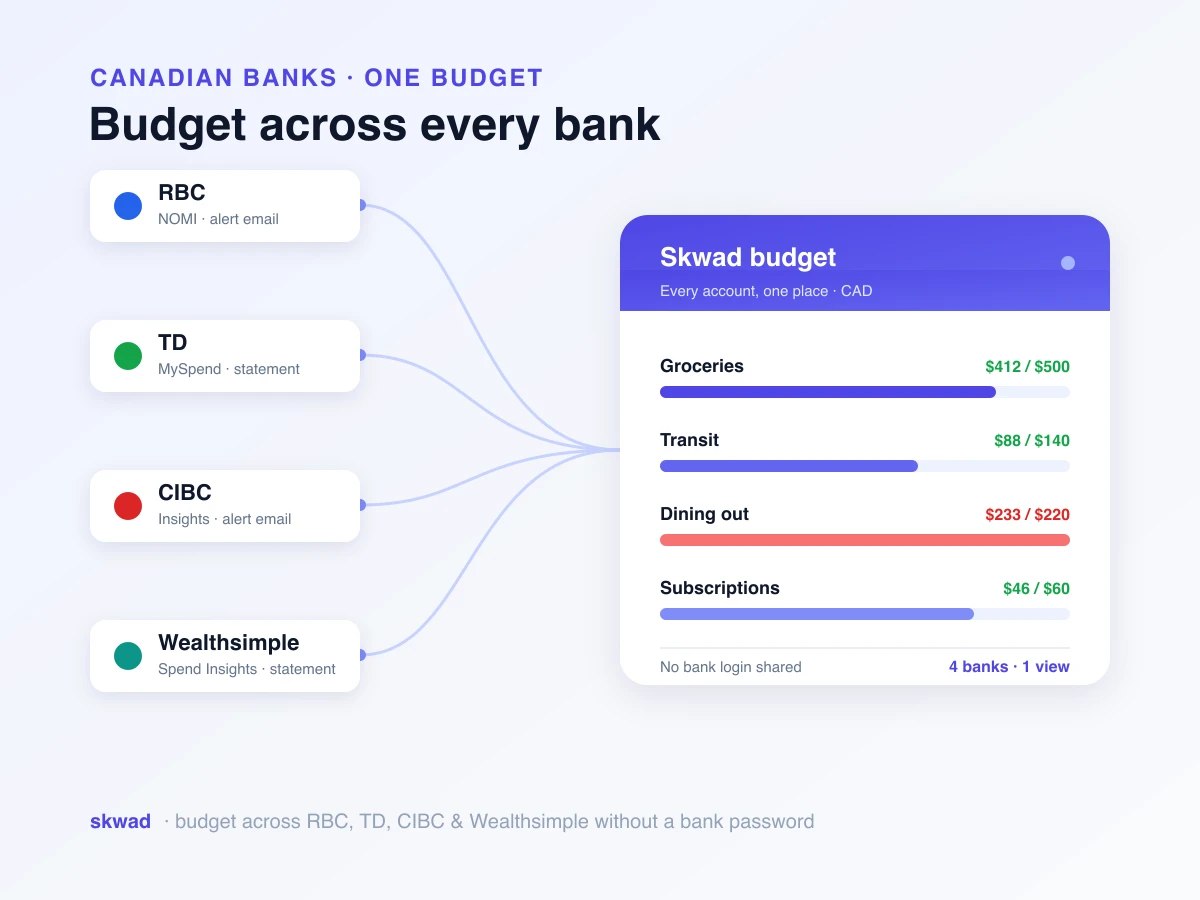
The Best Budget App for RBC, TD, and CIBC Customers (No Bank Login)
RBC NOMI, TD MySpend, and CIBC Insights each stop at your own bank. Here's how to budget across RBC, TD, CIBC, and Wealthsimple without sharing a bank password.
Sep 6, 2026
Itemize Your Amazon Orders in Your Budget with Skwad
Amazon shows up in your budget as one number. Skwad's Retail Order Sync Chrome extension turns each order into an itemized transaction with every item, tax, and shipping.
Sep 5, 2026
Reserved Categories: Savings That Stop Looking Spendable
Reserved budget categories keep your emergency fund and sinking funds out of Available to spend, so the money you set aside stops looking like money you can spend.
Sep 5, 2026
The 50/30/20 Budget Rule, Explained Simply
The 50/30/20 rule splits after-tax income into needs, wants, and savings. Here's how it works, where it fits, and how to see your real split against those targets.
Aug 16, 2026
How Many Months Should Your Emergency Fund Cover?
Your emergency fund should cover about three months of essential expenses, or six if your income is variable. Here's how to size yours and track it as runway.
Aug 16, 2026
Fixed-Cost Ratio: How Much of Your Income Is Committed?
Your fixed-cost ratio is the share of income locked into recurring bills before you make a single choice. Here's how to calculate it and why keeping it near half matters.
Aug 16, 2026