Duplicates
You can find the duplicates tool on both web and mobile. Clicking Duplicates filters for duplicates and automatically groups them for you.
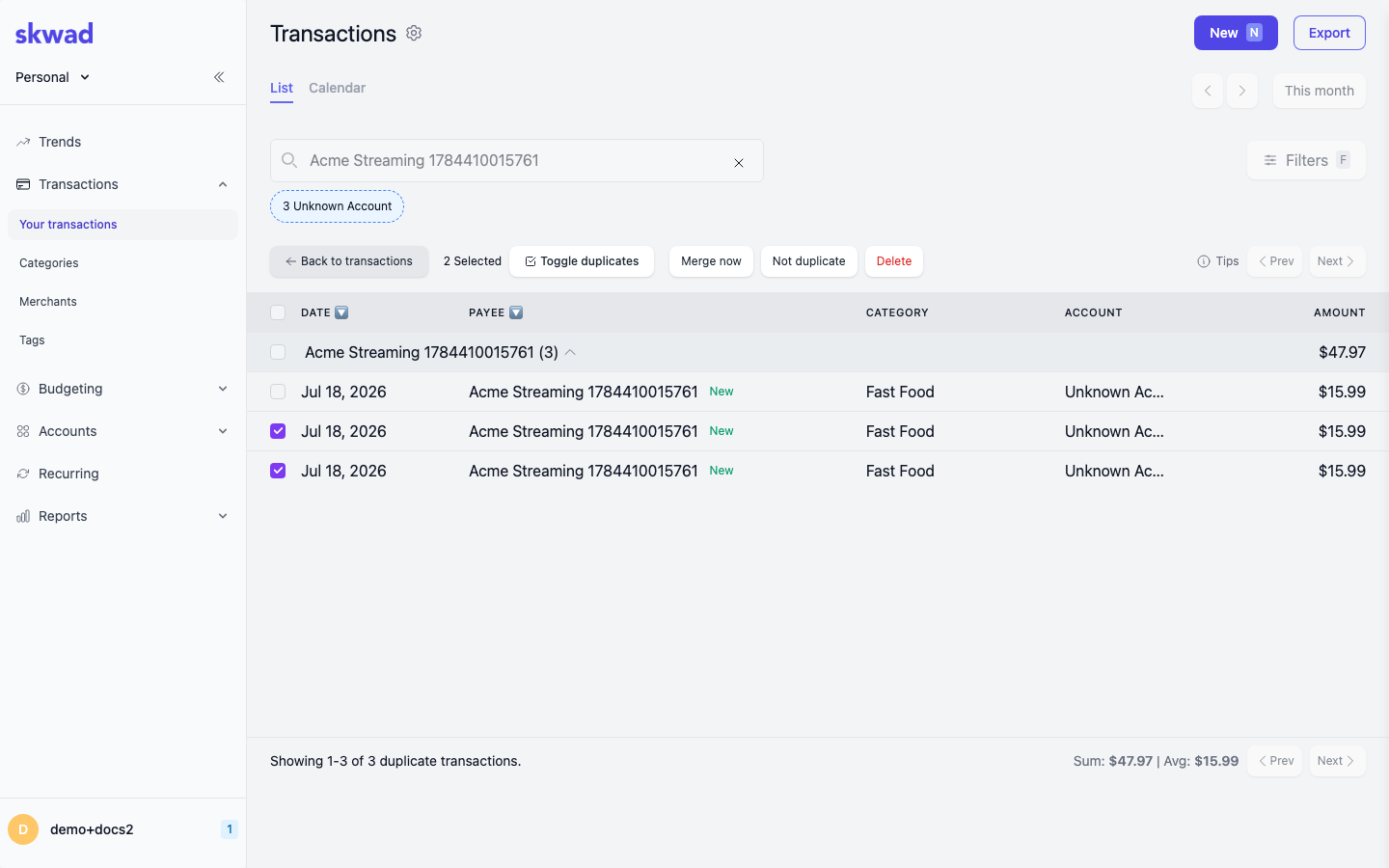
Use Toggle duplicates to switch between selecting all filtered transactions or only the duplicates.
Auto-merge
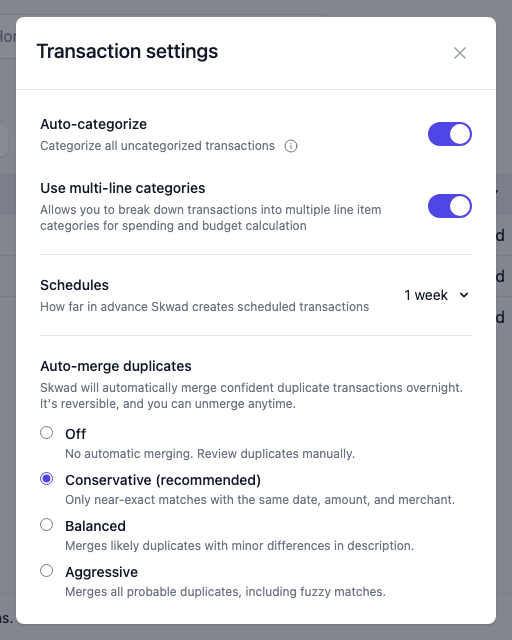
Skwad can merge confident duplicates for you automatically, so you don't have to clear them out by hand. Auto-merge runs in the background overnight, and it's fully reversible. You can unmerge anytime.
Set it up from your transaction settings (the gear icon on the transactions page, or Transactions > Settings). Only the captain can change this setting, and it applies to the whole skwad.
| Preset | What it merges |
|---|---|
| Off | No automatic merging. Review duplicates manually. |
| Conservative (recommended) | Only near-exact matches with the same date, amount, and merchant. |
| Balanced | Likely duplicates with minor differences in description. |
| Aggressive | All probable duplicates, including fuzzy matches. |
New skwads start on Conservative.
Reviewing duplicates manually
Whether or not auto-merge is on, you can review duplicates yourself in the Duplicates view. Select a group and use the toolbar actions:
- Merge now combines the group into a single transaction.
- Not duplicate marks the group as distinct so Skwad stops flagging it.
- Untag clears the duplicate grouping without merging.
- Delete removes the selected transactions.
If they're real transactions, marking them as Not duplicate keeps them separate going forward.
On mobile, open Duplicates from the transactions screen to review flagged groups with the same actions: merge, mark not duplicate, or delete. Auto-merge settings are available there too.
Skwad checks for duplicates in the background whenever your transactions change, so the list is ready when you open it. To check again right away, tap Refresh in the Duplicates toolbar on web or the Duplicates header on mobile.
Merged transactions
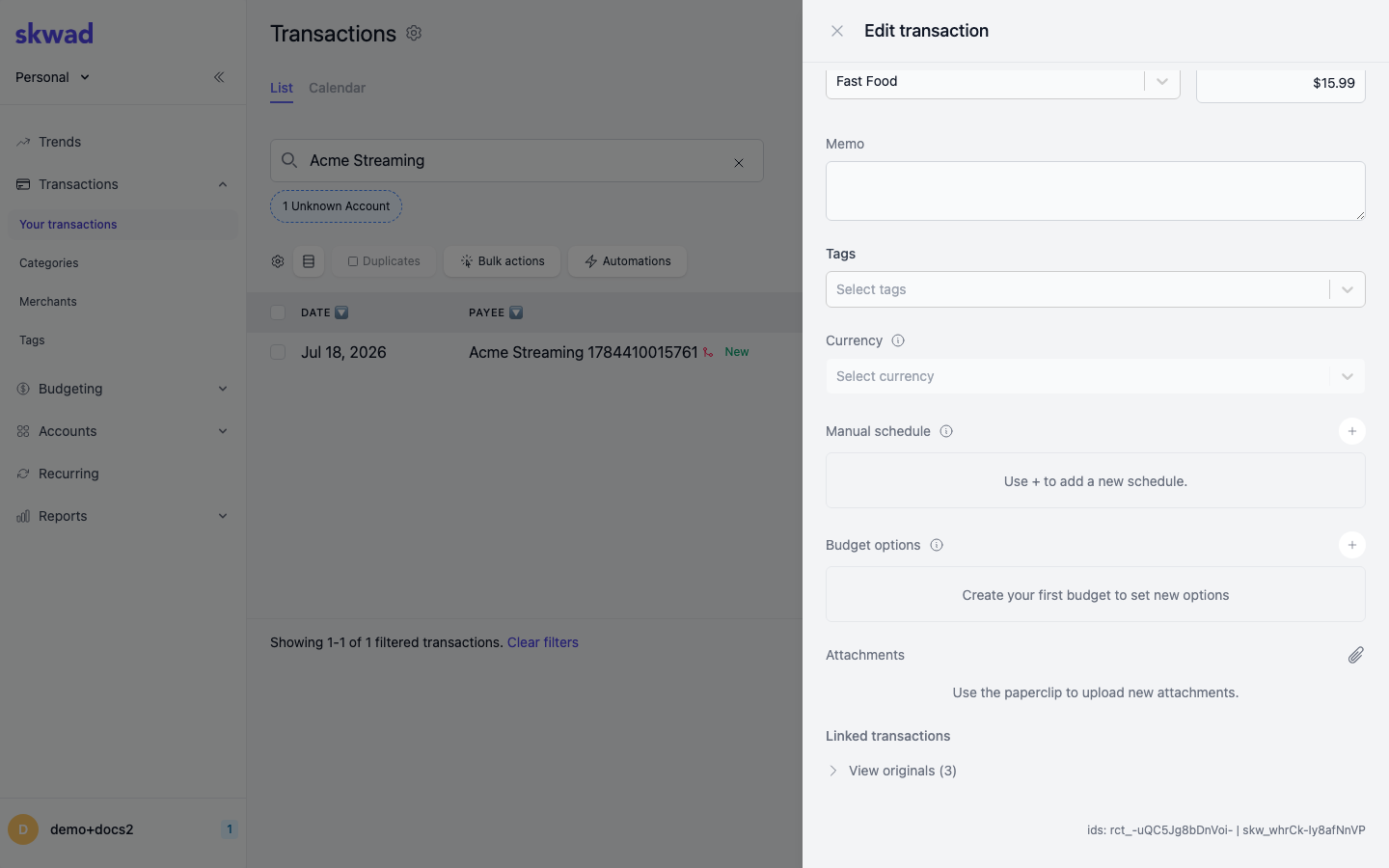
When transactions are merged (automatically or by you), Skwad keeps the originals. Open the surviving transaction and check the Linked transactions section to see what was combined, or Unmerge to split them back apart. Merged originals are excluded from your budgets, spending, and search so nothing is double-counted.
Common Cause: Duplicate Email Sources
There are 2 recommended ways to send bank alerts to Skwad:
- Email Forwarding: Your bank sends alerts to your personal email and you forward them to your scan address
- Gmail Integration: Skwad connects to your Gmail and automatically pulls alerts from your inbox
Sometimes, Skwaddies have more than one method configured for the same bank, resulting in duplicates.
Note: While it's technically possible to configure your bank to send alerts directly to your scan address, we don't recommend this approach as it's harder to manage and troubleshoot.
How This Creates Duplicates
Here's an example of how duplicates happen:
- Your bank sends an alert to your personal Gmail inbox
- Gmail Integration pulls this alert from Gmail and creates a transaction in Skwad
- Email Forwarding also forwards the same alert to your scan address
- Skwad processes both as separate emails and creates duplicate transactions
Solution: Use One Method Only
We recommend using Email Forwarding or Gmail Integration to keep all your bank alert settings in one place. No need to log into multiple bank accounts to update email preferences!
How to Fix
- Choose ONE method (either Email Forwarding OR Gmail Integration) per bank
- If using Gmail Integration, remove any email forwarding rules for those banks
- If using Email Forwarding, disable Gmail Integration filters for those banks
- Delete the duplicate transactions using the duplicates tool above
Common Cause: Duplicate Bank Alerts
If you see multiple alerts for the same transaction, you may have turned on duplicate bank alerts. For example, some banks will trigger both the ATM and Transaction alert for cash withdrawals.
How to Fix:
Turn off the duplicate alert type in your bank's notification settings.
Need Help?
Having trouble with duplicates? Email us and we're happy to help.