

Needs are the expenses you can’t reasonably go without, and wants are everything you choose on top. Your rent is a need; the streaming bundle is a want. Groceries are a need; the same meal ordered to your door is a want. Nearly every budgeting method is built on that one line, and it’s where a lot of budgets quietly go sideways.
Try it on last month’s card statement. The rent is easy. But what about the $14 lunch near the office, or the gym you went to twice? Below: how to tell the two apart, how the split drives the 50/30/20 rule, and the mix-ups that throw the whole thing off.
What separates a need from a want
A need is an expense that carries a real consequence if you stop paying it. Landlords, lenders, and the power company all notice. A want you could cut next month and life would carry on, maybe a bit less fun. Ask “what happens if I stop?” and most cases sort themselves in seconds.
On the needs side, the stuff that keeps your life and your paycheck going:
- Housing, whether that’s rent or a mortgage
- Groceries and basic food
- Utilities: electricity, water, heat, internet
- Insurance and healthcare
- Getting to work (bus pass, gas, parking)
- Minimum debt payments
Wants are what you add on top because they make life nicer:
- Dining out, delivery, takeout
- Streaming, subscriptions, premium app tiers
- Travel, concerts, and other entertainment
- Upgrades, and the nicer version of something you already own
Why are minimum debt payments a need? Skip one and it costs you. Paying extra toward debt is different. That’s closer to savings, because it improves where you stand instead of just keeping the lights on.
How the split powers 50/30/20
The 50/30/20 rule is built on this line: about 50% of take-home pay to needs, 30% to wants, 20% to savings. Elizabeth Warren and Amelia Warren Tyagi laid it out in their 2005 book All Your Worth. It only works if the sorting is right, though. File enough wants as needs and staying under the 50% ceiling starts to look impossible. The real problem? The labels.
Bring home $4,000 a month? Roughly, the buckets fill like so:
| Bucket | Target share | On $4,000 | Example expenses |
|---|---|---|---|
| Needs | 50% | $2,000 | Rent, groceries, utilities, insurance |
| Wants | 30% | $1,200 | Dining out, streaming, hobbies |
| Savings | 20% | $800 | Emergency fund, retirement, goals |
Needs over half? That’s information, not a character flaw. Usually it points at housing or a fixed-cost ratio that’s crept up, and that’s a better place to dig than cutting your one coffee a week. The Consumer Financial Protection Bureau’s guidance on creating a budget lands in the same spot. First separate what you must cover from what you choose. Then fiddle with the balance.
The misclassifications that trip people up
A handful of categories cause most of the trouble. File one wrong and the whole budget tilts.
Food is the big one. Groceries are a need. Dining out, delivery, and premium treats are wants, even though it’s all “food.” Toss the Friday pad thai in with the grocery run and a wants problem hides inside needs. Pulling them apart is often the moment people go, “Oh. So that’s where it goes.”
Subscriptions blur too. Internet: need. Basic phone plan: usually a need. Streaming, premium app tiers, most memberships: wants. It’s not about whether you use it. It’s whether cancelling next month would actually cost you anything.
And some expenses really are both. Basic phone service is a need; the premium upgrade is a want. A car for getting to work is a need; the luxury trim is partly discretionary. You don’t have to cram every line into one bucket. Essential part under needs, extra under wants, and the numbers stay honest.
Get these right and your savings rate becomes something you can trust. Leave wants hiding in the needs column and you overstate both your needs and how much of your spending is truly fixed. Then that 20% savings goal looks harder than it really is.
How Skwad handles the split for you
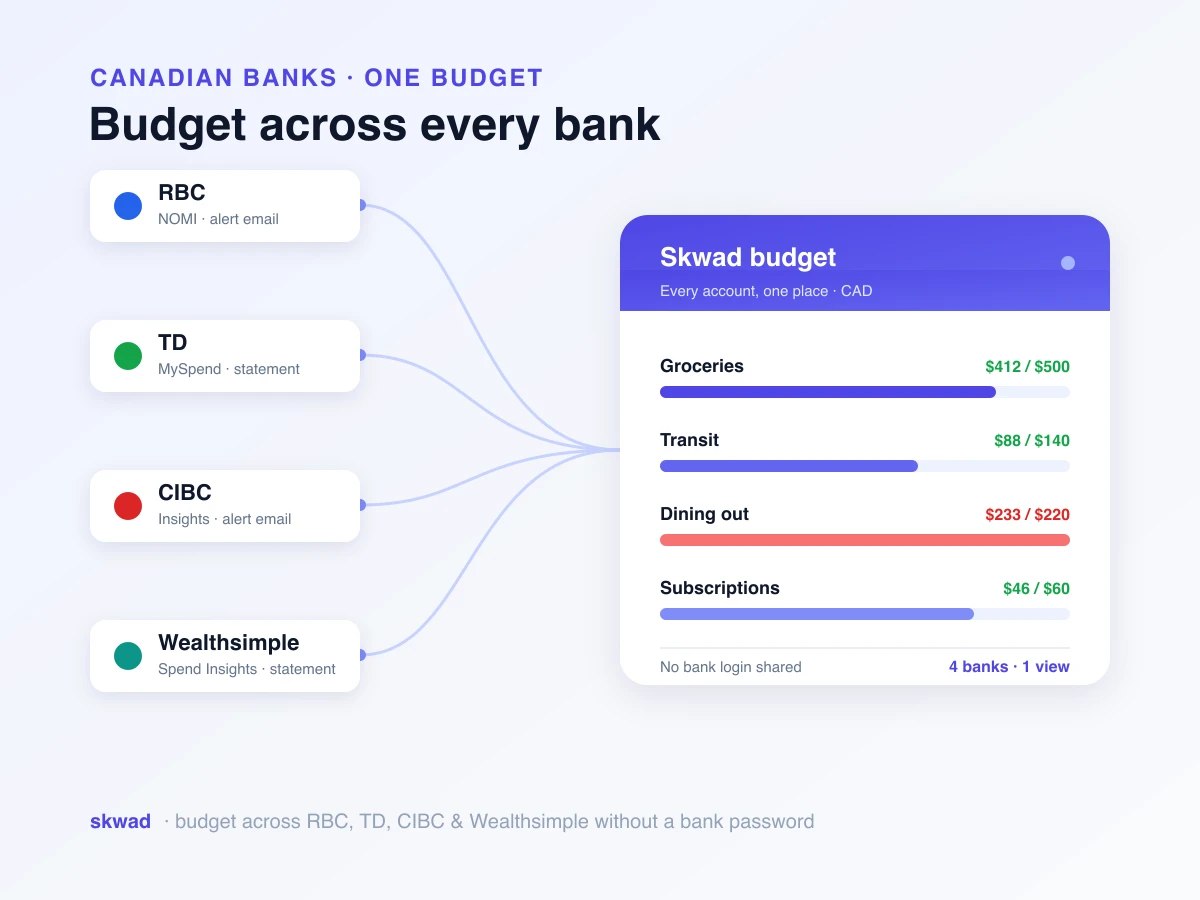
We built Skwad to sort your spending into needs and wants on its own. Your 50/30/20 breakdown stays current without a Sunday-night sorting session. Something in the wrong pile? Move it once. Skwad remembers, and the split stays right as your spending shifts around. Needs versus wants stops being a chore and becomes a number you glance at.
See your needs and wants split automatically
Get started with SkwadFrequently asked questions
What is the difference between needs and wants?
Needs are the bills you can’t skip without real fallout: housing, groceries, utilities, insurance, getting to work, and minimum debt payments. Wants are extras you pick for comfort or fun, like dining out, streaming, upgrades, and trips. Quick test: what happens if you stop paying? If the answer is ugly (an eviction notice, a missed loan payment), it’s a need.
How do I split my budget into needs and wants?
Sort each expense into needs, wants, or savings, then check the shares against the 50/30/20 rule: about 50% of take-home pay to needs, 30% to wants, 20% to savings. Treat the percentages as a guide, not a grade. Needs over 50%? That points you at housing or recurring costs. It doesn’t mean you failed.
Are groceries a need or a want?
Basic groceries are a need; the restaurant version of the same meal is a want. Food is where the line blurs most. Rice, eggs, and the stuff you cook at home are needs. Dining out, delivery, and the fancy cheese are discretionary. Splitting food this way is often the biggest single fix people make to their budget.
Is a subscription a need or a want?
Depends which one. Internet usually counts as a need, and so does a basic phone plan. Streaming, premium app tiers, and most memberships are wants. Don’t ask whether you use it. Ask whether you could cancel it next month and nothing bad would happen.
What if an expense is part need, part want?
Split it. The basic tier of a phone plan is a need, the premium upgrade a want. A car you need for work is a need; the leather-seat trim level is partly a want. No need to force every line into one bucket. Put the essential part under needs and the extra under wants, and the picture stays honest.
Draw the line once, and let it hold
Needs versus wants sounds obvious, right up until you sort your spending and find three restaurants filed under groceries. Get the split right and everything built on it, from 50/30/20 to your savings rate, starts telling the truth. Open Skwad to see your needs and wants divided for you, and check where the line really falls.